From sewing skills to industry readiness: first Garment Industry Taster cohort completes training

We have completed the first of three intensive Garment Industry Taster programs, designed to bridge the gap between existing sewing skills and employment in Australia’s garment manufacturing industry.
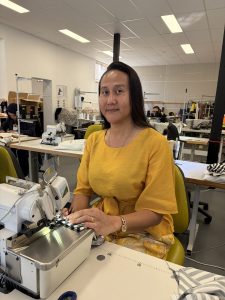
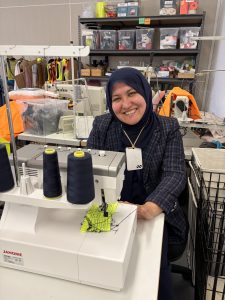
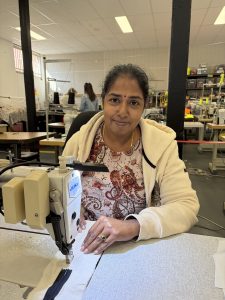
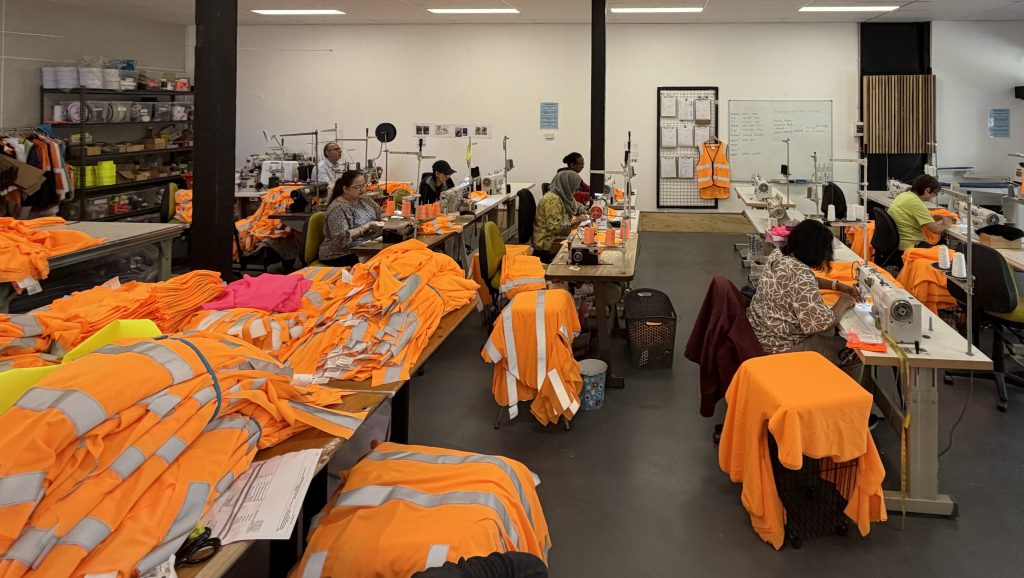
Ten participants recently completed the six-week Garment Industry Taster: Employment Readiness Training Program at our Assembled Threads manufacturing hub in North Melbourne.
Proudly supported by the City of Melbourne through its Social Investment Partnerships Program, the initiative provides practical, industry-based training for refugee and migrant women seeking pathways into garment manufacturing and associated employment.
Closing the gap between sewing and manufacturing
We developed the program after identifying a recurring gap between people who have sewing skills, often developed at home or through training and the skills and experience required to work within a commercial garment manufacturing environment.
Many of the women we meet can sew, and they genuinely want to work in the industry.
But commercial garment manufacturing is very different. You need to understand industrial machinery, production speed, quality, accuracy, workflow and the techniques used to produce garments efficiently and consistently.
The purpose of this program is to help bridge that gap.
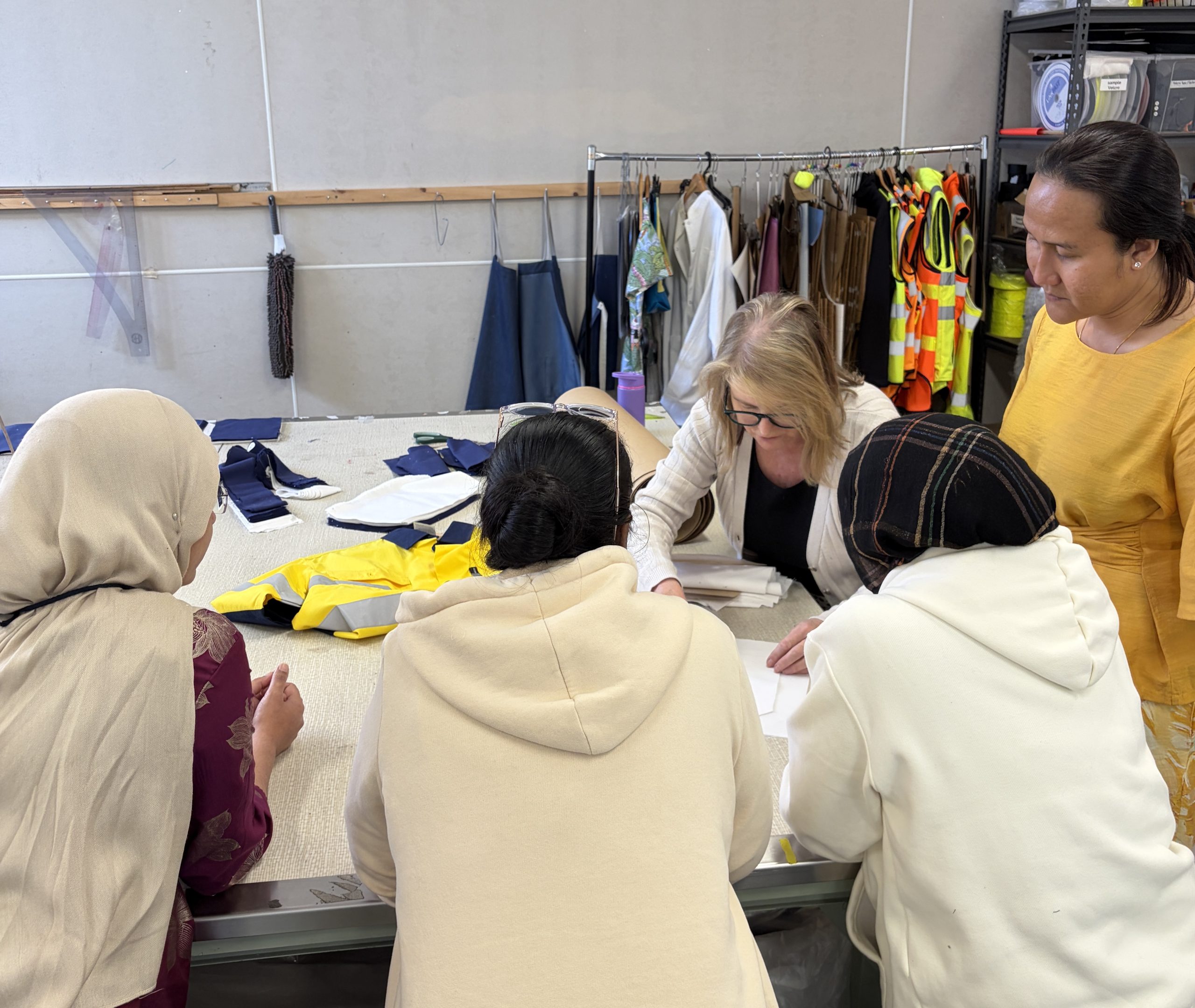
The six-week program was delivered by Julie Wright, an experienced garment-industry educator and former Head of Fashion at Holmesglen, within our operating manufacturing hub.
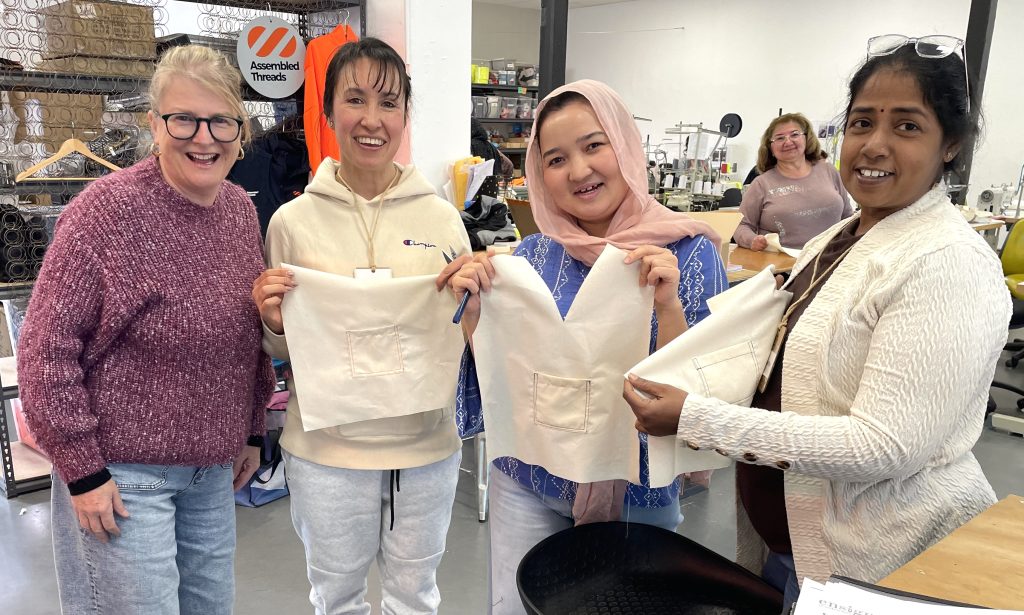
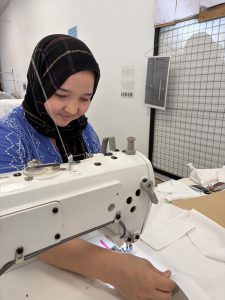
Participants trained across automatic industrial lockstitch, overlock, coverstitch, binding and double-needle machinery, together with steam pressing, zip insertion and woven and knit construction.
Using miniature garment construction and practical samples, participants were able to build a physical portfolio demonstrating their proficiency across different machines and manufacturing tasks.
Connecting the classroom with real factories
An important part of the program was helping participants understand not just how to operate industrial equipment, but what employment in the industry actually looks like.
During the program, we took the group to visit two operating garment factories where they could observe commercial production first-hand.
For Julie and Edwina, Assembled Thread’s CEO, one moment really stood out.
The women immediately recognised that the machinists in the factories were using exactly the same hand placement and techniques Julie had been teaching them at Assembled Threads.
You could see it click. What they had been practising suddenly connected directly with the workplace.
Several participants told us they had not previously understood the number of different machines involved in garment production, the pace of commercial manufacturing or the production environment itself.
Rather than discouraging them, that understanding strengthened their enthusiasm to pursue careers in the industry.
More than a certificate
The program was deliberately designed to go beyond course completion.
Throughout the six weeks, we observed participants across technical skills and broader employment-readiness measures including attendance, punctuality, communication, ability to follow instructions, reliability and participation in a production environment.
At the end of the program, Julie and Edwina met individually with each participant to discuss their experience, progress and career ambitions.
Julie provided each participant with a frank assessment of her current job readiness, and together we developed an individual plan for the next stage of her employment pathway.
We have also developed a digital Skills Passport for every participant, providing a record of demonstrated competencies that can be shared with prospective employers.
This is supported by each participant’s physical portfolio of garment and construction samples produced during the program.
The assessment process also highlighted that employment pathways in garment manufacturing extend well beyond sewing machine operation.
Participants demonstrated aptitude across areas including cutting, quality assurance, alterations and repair, and technical and production support roles, allowing future pathways to be matched more closely to individual strengths.
Turning training into employment
The results from our first cohort have already provided clear next steps.
60% of participants have joined the Assembled Threads casual roster, providing opportunities to gain further commercial production experience and continue developing their skills as work and capacity allow.
A further 30% have been identified as particularly well suited to employment within the alterations and repair sector, while one participant has been recommended for additional practice on industrial machinery before progressing towards employment.
We will continue working with our Industry Mentor Group and manufacturing employers to identify suitable employment opportunities for participants.
For us, this is a critical part of the program.
The objective isn’t to declare every participant job-ready simply because participates has completed six weeks of training. It is to understand each person’s skills and aptitude, honestly assess their readiness for industry, and identify the most appropriate pathway forward.
“I have learned more here than I have in six months”
Perhaps the strongest measure of the program’s impact came directly from the participants.
During our final interviews, one participant reflected:
“I have learned more here than I have in six months in other courses.”
I don’t see that comment as a criticism of existing training.
Registered training organisations have a different job to do, delivering qualifications against established training packages.
What we are testing is a very specific, intensive model that sits much closer to the workplace.
It is about taking someone who has aptitude and a desire to work in this industry and giving her exposure to the machines, techniques, expectations and environment she will actually encounter at work.
Other participants spoke about increased confidence, finally understanding what working in a garment factory involved and feeling excited about pursuing employment in the industry.
The final day was an emotional one.
There were definitely a few tears because nobody wanted the program to finish.
But overwhelmingly there was joy at what they had learned, at discovering what they were capable of and at seeing a genuine possibility of a career ahead of them.
Julie and Edwina were pretty emotional too.
That is exactly what we hoped this program would achieve.
Cohort one complete and two more to come
This first program is one of three six-week Industry Taster programs we will deliver.
We will take the learnings from this first cohort into the next two programs, while continuing to engage with manufacturers to ensure the training reflects the skills and roles employers actually need.
And our work with this first group isn’t finished.
We will continue working with our participants, Industry Mentor Group and manufacturing employers to help create the next opportunities.
The objective remains simple:
Training that understands industry.
Training that identifies aptitude.
Training that builds confidence.
Training that provides evidence of skills.
And ultimately, training that creates a genuine pathway to work.
Are you a garment manufacturer or employer?
We would love to hear from manufacturers and other industry employers interested in supporting the program, visiting the Assembled Threads Hub, identifying employment opportunities for our participants or becoming involved with future cohorts.